simple is beautiful
Digital Traveler
2 ... 2 ...

Monday, 10 December 2007

Mission San Francisco de Solano


In 1869, King Charles III of Spain sent Father Junipero Serra to build a string of missions in California. By 1823 21 missions had been built. The Spanish friars and Indian tribes helped to build them.

Mission San Francisco de Solano (pictured above) was the last one built.

The Roman Catholic church set up each mission to convert people to Christianity. A convert was called a neophyte.

Russian fur traders shared their supplies and donated bells to Mission San Francisco de Solano in the 19th century.

Today the mission is part of the Sonoma town square. Sonoma is the center of Northern California's wine country.

Sunday, 9 December 2007

Flower Sunday: How the Poinsettia Got Its Name


In Mexico, there was once a little girl who cried because she had no flowers to bring to a nativity scene in her town. An angel came and told her to pick a weed and plant it by the baby Jesus. She did and the small weed turned into a giant poinsettia.

In America the plant got its name from Joel Roberts Poinsett, a South Carolina doctor with an interest in botany who went on to be a U.S. ambassador to Mexico. When he traveled to Mexico, he saw a plant with bright red leaves and had it brought back to the United States.

When he got back to the U.S. he propagated the plant and had it sent out to some of his friends who were nurserymen. They ended up calling the plant a poinsettia, after Poinsett.

Saturday, 8 December 2007

More About Self-Portraits


A couple of posts ago, I wrote directions for taking a self-portrait.

I didn't include the most obvious way to take a self portrait and that is taking a picture of yourself standing in front of a mirror or in front of some sort of reflective glass.

I didn't post my own self-portrait, either, because I couldn't locate the one I wanted to post.

But, alas, I found it and it's posted above.

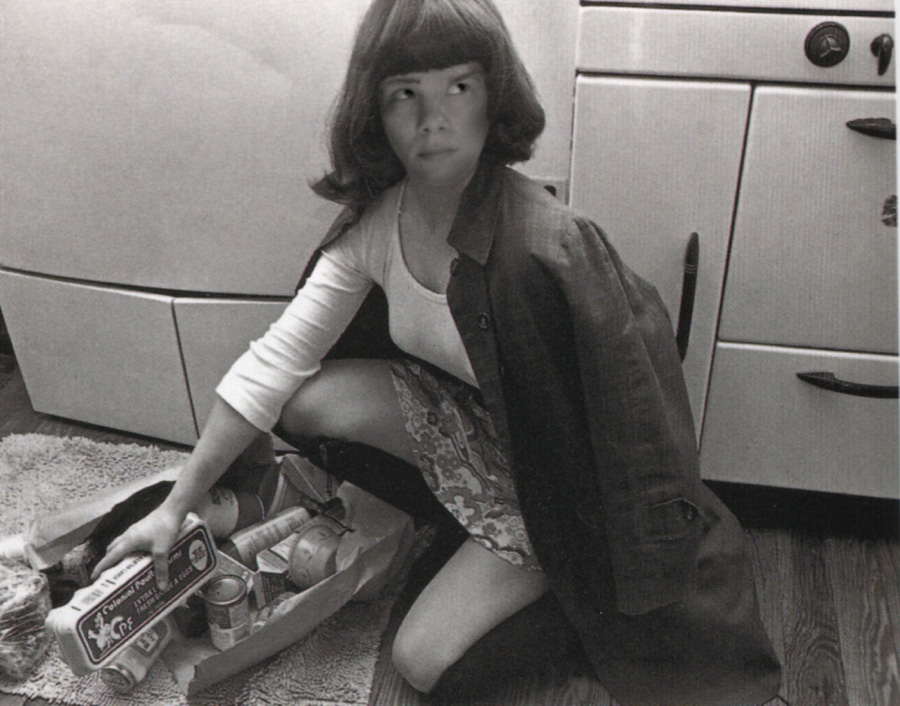
Speaking of self-portraits there are two photographers that come to mind: Cindy Sherman and Robert Mapplethorpe.

In the 1980s Sherman took pictures of herself in a variety of situations, sometimes acting out scenarios where she appears puzzled or bewildered.

Also in the 1980s Robert Maplethorpe took portraits of himself in a variety of roles, some of them sexual and controversial.

Thursday, 6 December 2007

We No Longer Need Weapons


After the shootings in Nebraska yesterday, perhaps the United States should do what Cambodia has done and put up billboards against violence.

This image was taken a few years ago in Siam Reap, Cambodia.

During the period from 1975-79 1.7 million people died in Cambodia. The Khmer Rouge were responsible for the killings.

Pol Pot led the Khmer Rouge in a campaign against people in urban areas. He moved people from the city to rural areas. Anyone against the regime was killed.

Pol Pot and his followers ended up killing 20 percent of Cambodia's population.

Wednesday, 5 December 2007

Digital Photography: How to Take Portraits and Self-Portraits


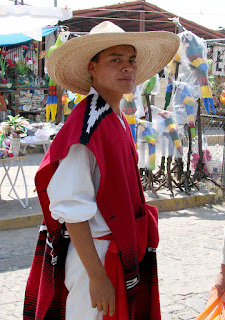
Candid portrait I took in Mexico

Everyone who’s anyone’s done it-made self-portraits or had had them shot or painted.

Pablo Picasso, Andy Warhol, Henri Matisse, Dali, and Max Ernst all did.

It’s a simple process, really that documents your existence, and even more, it reveals your character, who you are at any given moment. It represents the likeness of a person that can be caught on canvas or in a photograph or sketched on paper, any of which can be scanned and made into digital art.

In 1932 Gilberte Brassai photographed Pablo Picasso and in 1944 Henri Cartier-Bresson photographed Arnold Newman. Portraits entertain though the expressions of the subject. Some portrait artists collect images of the same person over a lifetime, some, like Cindy Sherman, photograph themselves.

As an artist you can choose who you want to create as your subject from the over-50 women of America’s Red Hat Society to young RAP singers or collect those of everyday people.

All you have to do is put your camera in auto or portrait mode and step back a bit from your subject, then zoom in to 80 mm focal length stepping back or forth until the image is clear when you press the shutter half-way down.

You can take your own self-portrait too--

1. Find a place to sit that's relatively clutter free both in front and in back. If you have to move a chair to the place go for it.
2. Check the lighting keep away from places where everything is casting a shadow.
3. Set your camera to portrait mode, look at the view finder and place the camera (use a tripod if you have to or a chair) so that it's pointing in the area where you will sit when it takes your picture.
4. Set the timer to the longest time there is. The timer shows up on your LCD screen as a clock (without a line crossed through it).
5. Place the camera where you want it (should be far enough so you have to zoom to 80mm to get the portrait) and click on the shutter.
6. Quickly move to the place that you found where you will pose for a picture.
7. After the camera takes the picture look at the LCD screen to see if your head and shoulders are comfortably in the frame. If not zoom in or out to where you think you will be in the frame.
8. Set the timer again and click the shutter.
9. Check to see if you're framed well.
10. Repeat steps 6 to 9, this time practicing a pose, say leaning forward in with your arms resting on your knee (a writer's pose).

Tuesday, 4 December 2007

Los Angeles History and Architecture Web Sites


The history of Los Angeles includes everything from the Gold Rush to modern architecture. A history of LA County can be found here.

One of the best Web sites about Los Angeles architecture is from you-are-here.com.
You wouldn't know by the URL that this Web site has a vast array of information from an interactive map of the city to pictures and info on just about every building in the city.

The site lists buildings by the decade in which they were built. For each decade there are dozens of buildings listed.

It also has categories for Theater and Movie palaces, Googie architecture and street photography.

The images aren't great, but they certainly are entertaining.

Saturday, 1 December 2007

Babcock in Billings


The Art Deco theaters opened all across the country in the early twentieth century.

This is the Babcock Theater in Billings Montana. Movies are no longer shown there, but it is the place to see boxing.

The site of this theater was purchased by A.L. Babcock in 1889. Before this theater was built, there was an opera house on the property. The opera house burned down in 1906. Babcock went on to build a theater on the site. Fire destroyed the interior of the theater in 1935. It was rebuilt by a Californian right after the fire.

LABEL